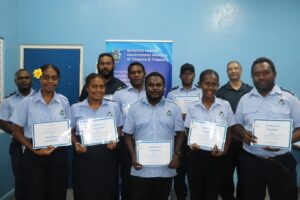
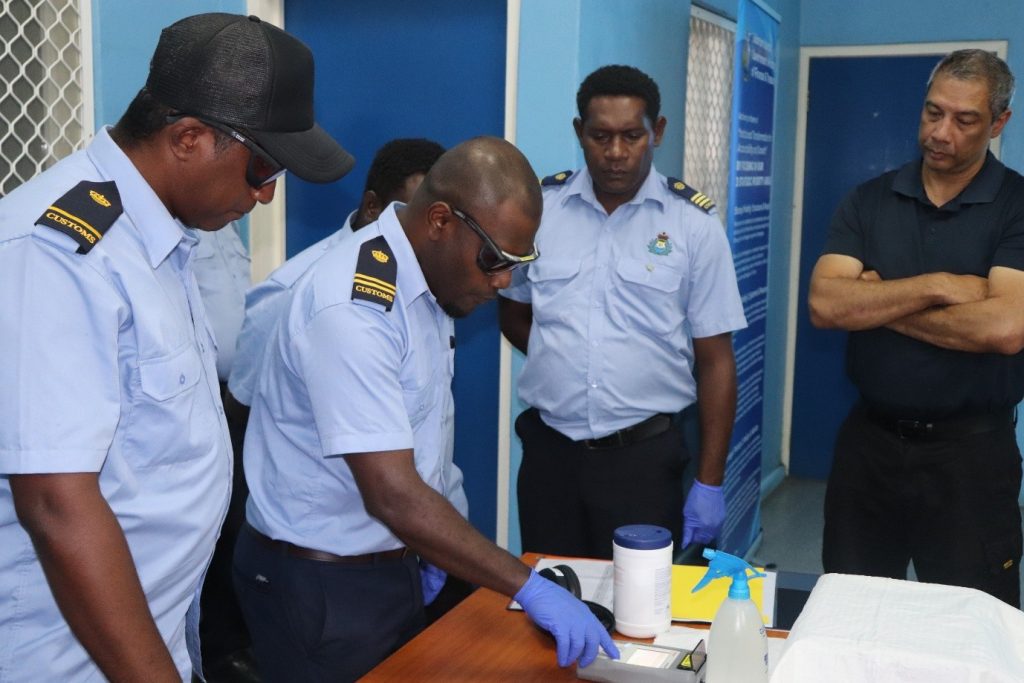
THE Solomon Islands Customs and Excise Division (SICED) officers completed a train-the-trainer and hands-on Operator Course to enhance their ability to detect and identify border-controlled narcotics last week (June 02 – 04), at the Customs Headquarters in Honiara.
Operational and technical officers from key divisions, including Seaport Container and Cargo Examination, Airport Central Operations, Post Clearance Audit (PCA) – Compliance and Enforcement, and Revenue and Postal Parcel Unit, attended the training.
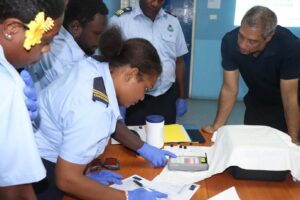
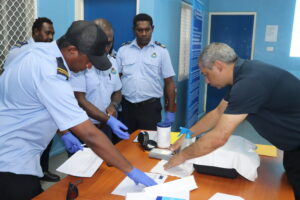
Led by the Australian Department of Home Affairs and the Australian Border Force, the training covered key Customs operational areas such as narcotics identification, safe handling of hazardous substances, sampling techniques, data interpretation, troubleshooting, and the practical use of substance detection equipment.
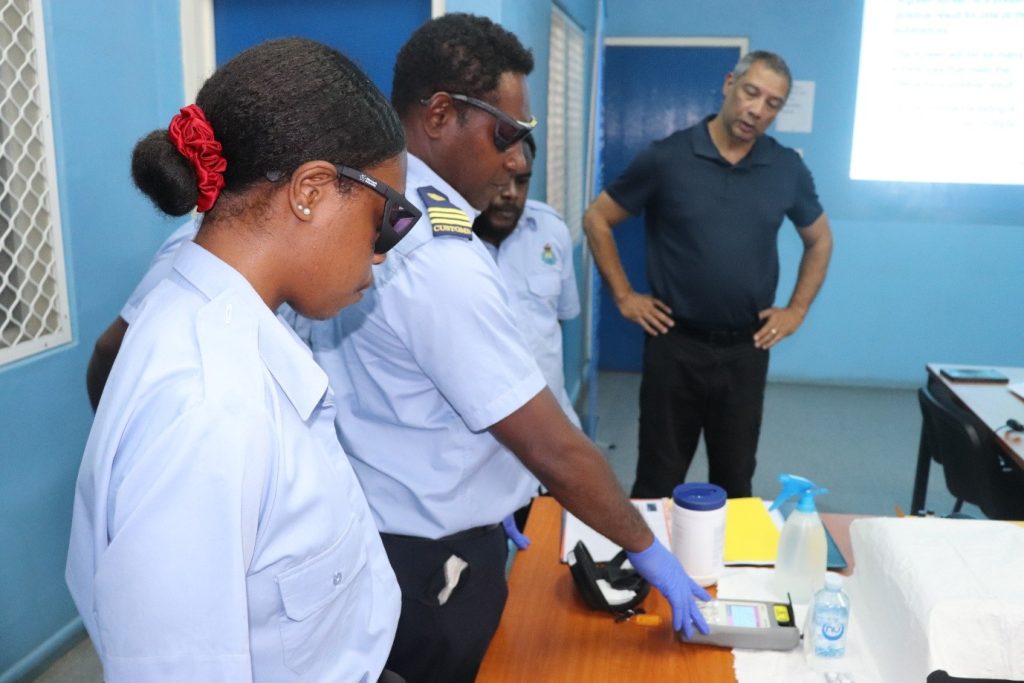
Another two officers try to hands-on the testing device at the practical scene.
“It provides me with practical skills in testing various forms of suspected drugs, including pills, powders, resins, and liquids, during examinations and investigations.
“These skills will strengthen my effectiveness in conducting examinations, gathering evidence, and supporting law enforcement activities related to narcotics detection and identification.
Passenger and Cargo Control Programme (PCCP) training was conducted on 01st –05th May, supported by the United Nations Office on Drugs and Crime (UNODC), the Australian Government through the Australian Border Force (ABF), the World Customs Organization (WCO), and implemented by the Ministry of Finance and Treasury (MoFT) of the Solomon Islands Government. This training is the first of many capacity-building activities to be delivered under the PCCP, which will extend into 2027 and beyond.
The Solomon Islands is emerging as a key location for illicit drugs and as a transit point to larger countries like Australia and New Zealand. Therefore, strengthening Customs capabilities and working with our other law enforcement partners, including like-minded international partners, to deter, detect, and disrupt transnational organised crime and protect the community, is one of our key priorities.
This important training is critical to the shared regional challenges in addressing transnational organised crime and will enable the Customs and Excise Division to more efficiently and effectively manage goods and people who cross our border, through intelligence-driven pre-border targeting, risk management, and inter-agency cooperation in the Solomon Islands. Officers received official certificates upon completion.
THE END///
- SICED PRESS
With Photos